17 Unconventional Language Learning Methods That Actually Work (Forget Duolingo)
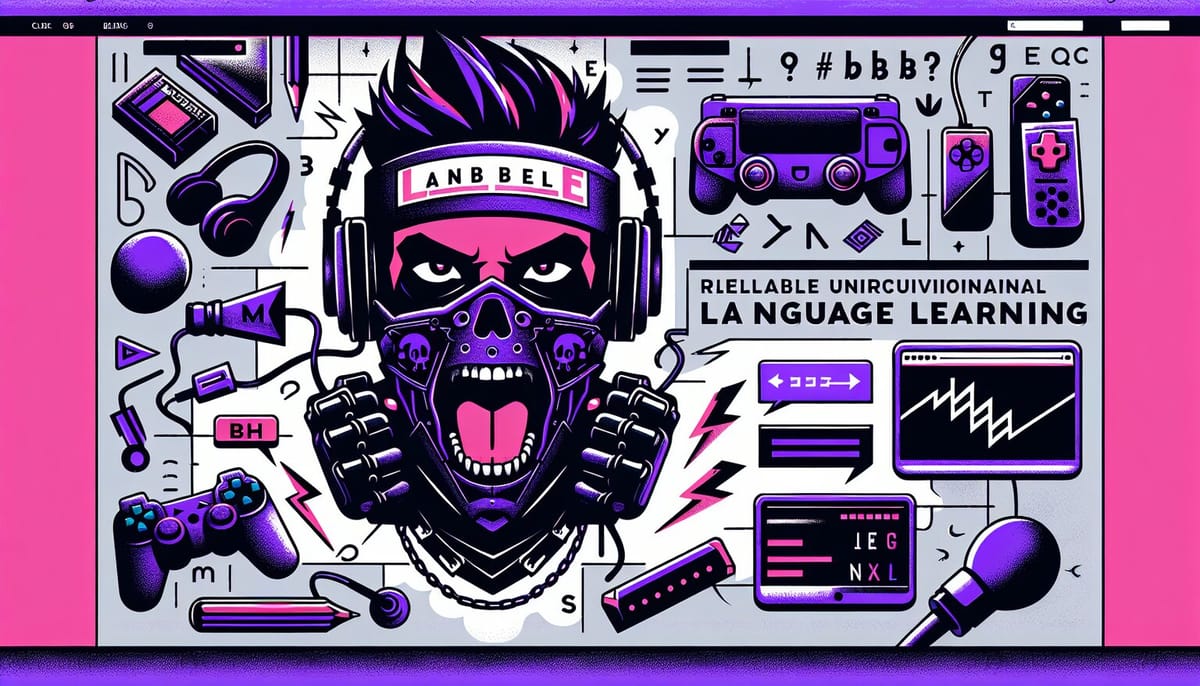
Let's be brutally honest: traditional language learning apps and classroom methods work for some people, but if you're reading this, you're probably not one of them. Maybe you've tried Duolingo for six months and can barely hold a conversation. Maybe you sat through years of high school Spanish and forgot everything. Maybe you're just bored to death by conventional approaches.
Good news: there are dozens of wildly effective, scientifically-backed language learning methods that most people never discover. These aren't gimmicks—they're strategies used by autodidacts, neuroscientists, and successful language hackers who've achieved fluency through unconventional means.
This guide reveals the most powerful alternative approaches to language learning, ranked from "slightly unusual" to "completely outside the box." Let's rebel against boring language education.
Why Traditional Methods Fail So Many Learners
Before we dive into alternatives, understand why conventional approaches don't work for everyone:
The One-Size-Fits-All Problem: Traditional methods assume everyone learns the same way, but research from Harvard's Education School shows massive individual variation in optimal learning styles, pacing, and motivation sources.
Delayed Gratification Fatigue: Apps and classes make you wait months before having real conversations, killing motivation before you reach the payoff.
The Classroom Illusion: Completing lessons feels like progress, but without real-world application, most information never makes it to long-term memory. Studies in Cognitive Psychology show that passive learning (listening to lectures, doing exercises) results in 70-90% information loss within a week.
Missing Emotional Connection: Humans learn best when emotionally engaged, but grammar drills and vocabulary lists are emotionally neutral—and therefore forgettable.
The methods below solve these problems through engagement, personalization, and real-world application from day one.
Unconventional Method #1: The Telenovela Immersion Technique
How it works: Choose one TV show in your target language (soap operas are perfect because of exaggerated expressions and repetitive storylines). Watch the SAME episode 3-5 times with different focus:
- Watch 1: Subtitles in your native language (understand plot)
- Watch 2: Subtitles in target language (connect sound to written words)
- Watch 3: No subtitles (test comprehension)
- Watch 4-5: Repeat favorite scenes, shadowing the dialogue
Why it works: Repetition with variation creates deep pattern recognition without boredom. The emotional engagement of following characters makes vocabulary stick naturally. Research from MIT's Brain and Cognitive Sciences Department shows that emotional context increases memory retention by up to 400%.
Best for: Spanish (telenovelas), Turkish (dizis), Korean (K-dramas), Thai (lakorns)
Time commitment: 2-3 hours per week, but it replaces your regular TV time
Success stories: Polyglot Steve Kaufmann credits watching Russian crime series repeatedly as the breakthrough that took him from intermediate to advanced Russian.
Unconventional Method #2: The Goldlist Method
How it works: Created by linguist David James, this handwritten technique works like this:
- Day 1: Write 25 words/phrases in your target language on the left side of a page
- Two weeks later: Review the list, copy only the words you DIDN'T remember to a new page
- Two weeks later: Repeat with the distilled list
- Continue until all words stick
Why it works: Handwriting activates different neural pathways than typing. The long intervals between reviews align with optimal spaced repetition. The method is stress-free—you never "fail," you just naturally filter to what needs more attention.
According to research published in Psychological Science, handwriting produces stronger memory encoding than typing or reading alone.
Best for: Vocabulary acquisition, especially for visual learners
Time commitment: 20-30 minutes every two weeks
Unique advantage: Works without internet or devices, perfect for unplugged learning
Unconventional Method #3: Language Learning Through Music Production
How it works: Use music creation software (GarageBand, FL Studio, even free tools) to:
- Remix songs in your target language
- Study lyrics deeply to understand wordplay and metaphors
- Record yourself rapping or singing in the target language
- Create original songs using vocabulary you're learning
Why it works: Music activates multiple brain regions simultaneously—language processing, rhythm, emotion, and motor skills (if you're singing/rapping). Research from Northwestern University's Auditory Neuroscience Laboratory shows that musical training enhances language processing abilities.
Best for: Spanish (reggaeton, Latin pop), French (rap, chanson), Korean (K-pop), German (rap, metal)
Time commitment: 1-3 hours per week
Bonus: You'll understand cultural references and slang that textbooks never teach
Unconventional Method #4: The Scriptorium Technique
How it works: This hardcore method combines reading, writing, and listening:
- Find native content (article, book passage, podcast transcript)
- LISTEN to a native speaker read it (or use text-to-speech)
- READ along while listening
- WRITE it out by hand while reading aloud yourself
Repeat with the same passage 3-5 times.
Why it works: Engages visual, auditory, and kinesthetic learning simultaneously. Forces slow, deliberate processing that creates deep neural connections. This method comes from classical language learning and has produced fluent speakers for centuries.
Research from Cambridge University's Language Sciences demonstrates that multi-sensory learning creates redundant neural pathways, making recall faster and more reliable.
Best for: Serious learners willing to invest time for superior retention
Time commitment: 45-60 minutes, 4-5x per week
Warning: Intense and time-consuming, but arguably the most effective method for written language mastery
Unconventional Method #5: Cooking Through Language
How it works:
- Find cooking channels/blogs exclusively in your target language
- Learn recipe vocabulary and cooking verbs
- Actually cook the recipes while following instructions in target language
- Join online cooking communities in that language
Why it works: Cooking is procedural learning—you're physically doing actions while hearing/reading the words, creating powerful motor-memory associations. Plus, you get to eat the rewards of your study session.
Studies from Journal of Experimental Psychology show that action-based learning (doing while learning) produces retention rates 60% higher than passive study.
Best for: Any language with rich food culture (Italian, French, Japanese, Thai, Mexican Spanish, Chinese)
Time commitment: 1-2 hours per week (you're already cooking anyway)
Community aspect: Food brings people together—join cooking classes in your target language for social practice
Unconventional Method #6: The Sentence Mining Method
How it works: Instead of learning isolated words, collect complete sentences from native content:
- Watch movies, read books, listen to podcasts
- When you encounter a sentence with one unknown word (but you understand context), save it
- Add these sentences to Anki or a notebook
- Review and practice full sentences
Why it works: You learn grammar patterns, collocations, and usage context automatically. Sentences carry meaning and emotion, unlike word lists. This is how the Refold method has helped thousands reach fluency.
Research published in Applied Linguistics shows that lexical chunks (common phrases) are processed more efficiently by the brain than individually constructed sentences.
Best for: Intermediate learners moving toward fluency
Time commitment: 30 minutes daily for sentence collection and review
Tools: Anki, LingQ, Readlang, or simple notebooks
Unconventional Method #7: Gaming in Your Target Language
How it works:
- Change your game language settings to target language
- Play story-rich RPGs with lots of dialogue
- Join online multiplayer communities in target language
- Stream gameplay while narrating in target language
Why it works: Games provide context, repetition, and immediate feedback. You NEED to understand to progress, creating powerful motivation. Multiplayer games add social pressure and real-time communication practice.
According to research from the University of Helsinki, gamers acquire vocabulary and grammar patterns 30% faster than traditional classroom learners when playing 10+ hours per week in target language.
Best games for language learning:
- RPGs: The Witcher series, Final Fantasy, Persona (heavy dialogue)
- Life sims: The Sims, Stardew Valley, Animal Crossing (everyday vocabulary)
- Story games: Telltale series, Life is Strange (conversational language)
- MMOs: World of Warcraft, Final Fantasy XIV (community interaction)
Best for: Gamers who already spend time gaming—why not make it productive?
Time commitment: 5-10 hours per week (replacing existing gaming time)
Unconventional Method #8: The Shadowing Marathon
How it works:
- Find 30-60 minutes of native audio (podcast, audiobook, speech)
- Listen and SIMULTANEOUSLY repeat everything you hear, mimicking pronunciation, rhythm, and intonation exactly
- Don't worry about understanding every word—focus on sound production
- Do this daily for 30 days straight
Why it works: Shadowing is how simultaneous interpreters train. It builds pronunciation, listening comprehension, and speaking fluency simultaneously. Your mouth learns the physical patterns of the language.
Research from the European Journal of Psychology of Education shows that shadowing practice produces measurably better pronunciation than traditional repetition exercises.
Best for: Improving pronunciation and speaking fluency, especially for advanced beginners to intermediate
Time commitment: 20-30 minutes daily
Recommended content: Podcasts slightly above your level (you understand 60-70%)
Unconventional Method #9: Childhood Content Immersion
How it works: Watch cartoons, read children's books, and play children's games in your target language.
Why it works: Children's content uses simpler grammar and high-frequency vocabulary with lots of repetition. Visuals provide context for unknown words. No shame in this—it's literally designed for language acquisition.
Linguist Stephen Krashen's Input Hypothesis emphasizes that comprehensible input (content just slightly above your level) is the key to acquisition. Children's content is perfectly calibrated for beginners.
Best resources:
- YouTube: Peppa Pig (British English), Caillou (French/English), Doraemon (Japanese)
- Netflix Kids: Huge selection in multiple languages
- Children's books: Eric Carle, Dr. Seuss equivalents in other languages
- Pokémon games: Available in 9+ languages with visual context
Best for: Absolute beginners and early intermediate learners
Time commitment: 30-60 minutes daily
Pro tip: No one needs to know your "guilty pleasure" is Peppa Pig in German
Unconventional Method #10: The Anki Image Deck Method
How it works: Create Anki flashcards where:
- Front: Image representing the word/concept
- Back: Target language word (NO translation to your native language)
Build direct associations between concepts and target language, bypassing translation.
Why it works: Eliminates the mental translation step that slows fluent speakers. Creates direct neural pathways from meaning to target language. This is how polyglot Luca Lampariello maintains 14+ languages.
Studies from Bilingualism: Language and Cognition journal show that eliminating translation as an intermediate step accelerates fluency development.
Best for: All levels, especially visual learners
Time commitment: 15-20 minutes daily for review
Where to find premade decks: AnkiWeb shared decks, though custom decks you create yourself are more effective
Unconventional Method #11: Social Media Persona Creation
How it works:
- Create a separate social media account (Instagram, Twitter/X, TikTok) exclusively in your target language
- Follow only native speakers and content in target language
- Post daily in target language (even simple stuff: "Had coffee today ☕")
- Engage with comments and build a following
Why it works: Creates daily accountability and real audience feedback. You'll learn current slang, memes, and how people actually communicate online. Social pressure motivates consistency.
Research on language learning and social identity shows that adopting a linguistic identity in the target language accelerates acquisition.
Best for: Social media users, especially younger learners
Time commitment: 15-30 minutes daily
Bonus: You might make actual friends and language exchange partners
Unconventional Method #12: The "No Translation" Dictionary Method
How it works: Use monolingual dictionaries (Spanish-Spanish, Japanese-Japanese) instead of bilingual dictionaries from the start.
Why it works: Forces you to think in the target language. Definitions in the target language provide more vocabulary exposure and show how words relate to each other. This is how native speakers learn new words.
According to research from Oxford University's Language Centre, intermediate learners who switch to monolingual dictionaries show 25% faster vocabulary expansion.
Best for: Upper beginner to intermediate learners (A2+)
How to start: Use simple learner dictionaries designed for language learners (Oxford, Cambridge, Duden all make these)
Warning: Frustrating at first, but hugely beneficial after 2-3 weeks of adjustment
Unconventional Method #13: Accent Acquisition Through Mimicry
How it works:
- Choose one specific native speaker (actor, YouTuber, podcaster) whose voice you like
- Study their speech patterns obsessively
- Record yourself mimicking their exact way of speaking
- Practice full conversations in their style
Why it works: Specific imitation is easier than general "native accent." You're not trying to sound like "a Spanish speaker"—you're trying to sound like Pedro Almodóvar. More focused = faster progress.
Research from Speech Communication journal demonstrates that imitating specific speakers produces better prosody (rhythm and intonation) than generic pronunciation drills.
Best for: Learners who care about sounding native, actors, voice enthusiasts
Time commitment: 20-30 minutes, 3-4x per week
Fun factor: You get to "become" your favorite foreign celebrity
Unconventional Method #14: The Comprehensible Input Binge
How it works: Inspired by Dreaming Spanish and similar platforms:
- Consume 1000+ hours of comprehensible input (content you understand 80-95% of)
- No explicit grammar study, no flashcards, no output pressure
- Just watch, listen, read—but make sure you comprehend most of it
- Natural acquisition happens through massive exposure
Why it works: Aligns with Stephen Krashen's Natural Approach and how children acquire language. Your brain figures out patterns automatically with enough exposure.
Longitudinal studies of this approach show learners reaching B2 conversational fluency in 1200-1500 hours of comprehensible input, though reading/writing skills lag without explicit practice.
Best for: Self-motivated learners with time for massive input, people who hate grammar study
Time commitment: 2-3 hours daily for 12-24 months
Platforms: Dreaming Spanish, Comprehensible Input YouTube channels, graded readers, language learning podcasts for beginners
Unconventional Method #15: Language Learning Through Dating Apps
How it works: Set your location to target language countries, list that you're learning the language, and have conversations with real people.
Why it works: Motivation skyrockets when there's romantic potential. Conversations are authentic and emotionally engaging. You learn how people actually communicate (including flirting, humor, and cultural references).
Studies on motivation in language learning show that integrative motivation (wanting to connect with people) is significantly more powerful than instrumental motivation (career benefits).
Best for: Adults comfortable with dating app culture
Time commitment: 30-60 minutes daily
Ethics note: Be transparent that you're learning. Many people enjoy language exchange through these platforms.
Safety warning: Standard dating app safety rules apply—protect personal information and meet in public if taking conversations offline
Unconventional Method #16: The Memory Palace Technique
How it works:
- Imagine a familiar place (your house, commute route, childhood home)
- Place vivid, bizarre images representing target language words at specific locations
- "Walk through" your memory palace to review vocabulary
Example: To remember Spanish "araña" (spider), imagine a giant spider in your bathroom.
Why it works: Spatial memory is incredibly powerful. Memory athletes use this technique to memorize thousands of items. Bizarre, emotional images stick better than abstract words.
Research from Neuron journal shows that the method of loci (memory palace) activates spatial memory centers that have nearly unlimited capacity.
Best for: Concrete nouns and verbs (harder for abstract concepts)
Time commitment: 30 minutes to build palace, 10-15 minutes daily for review
Resources: Moonwalking with Einstein by Joshua Foer explains the technique in depth
Unconventional Method #17: Teaching What You Learn
How it works:
- Create a blog, YouTube channel, or TikTok where you teach your target language to others
- Explain grammar points you just learned
- Share vocabulary in creative ways
- Document your learning journey publicly
Why it works: Teaching forces deep understanding. You can't explain something you don't truly grasp. Creating content requires organizing information, which strengthens memory. Public accountability drives consistency.
The "protégé effect"—learning by teaching—is well-documented in educational psychology research. Students who teach others retain 90% of material versus 10-20% from passive learning.
Best for: Extroverts, content creators, people who enjoy helping others
Time commitment: 2-4 hours per week for content creation
Growth potential: You might build an audience and even monetize your language learning journey
Creating Your Unconventional Learning Stack
You don't need to try all 17 methods. Here's how to build a personalized system:
Assess Your Learning Style
Visual learners: Memory palace (#16), image Anki decks (#10), TV immersion (#1)
Auditory learners: Shadowing (#8), music production (#3), comprehensible input binges (#14)
Kinesthetic learners: Cooking (#5), gaming (#7), scriptorium technique (#4)
Social learners: Language exchange on social media (#11), dating apps (#15), teaching others (#17)
Build a Three-Method System
Method 1 (Daily, 20-30 min): Vocabulary/grammar foundation
- Sentence mining (#6) OR goldlist method (#2) OR image Anki (#10)
Method 2 (3-4x week, 45-60 min): Active skill building
- Shadowing (#8) OR scriptorium (#4) OR gaming (#7)
Method 3 (Daily, 1-2 hours): Immersion/enjoyment
- TV shows (#1) OR comprehensible input (#14) OR social media (#11)
Track and Adjust Monthly
What's working? What's boring? What's producing results?
Be ruthless about dropping methods that don't fit your personality, even if they work for others.
Common Mistakes with Unconventional Methods
Mistake #1: Method Hopping Too Quickly
Give each approach at least 30 days before judging effectiveness. Early frustration is normal.
Mistake #2: Avoiding All Structure
Even rebels need some foundation. Combine unconventional methods with minimal grammar/vocabulary study for best results.
Mistake #3: Refusing to Speak Early
Some methods (like comprehensible input) delay speaking too long. Balance with conversation practice from month 2 onward.
Mistake #4: Ignoring Your Personality
Introverts forcing themselves into social methods or extroverts doing solo silent reading will burn out. Choose methods you'll actually enjoy.
The Science Behind Alternative Approaches
Why do these unconventional methods work when traditional approaches often don't?
Emotional Engagement: Methods involving stories, games, music, and relationships create emotional memory tags that make information stick.
Multi-Sensory Processing: Techniques combining visual, auditory, and kinesthetic input create redundant neural pathways.
Intrinsic Motivation: When you're genuinely interested in the content (not just "learning" for its own sake), your brain prioritizes retention.
Immediate Application: Methods that require using the language immediately (gaming, social media, dating apps) force active processing rather than passive recognition.
Personalization: Unconventional approaches adapt to individual preferences, which research shows is crucial for long-term adherence.
Conclusion: Become a Language Learning Rebel
The language learning industry wants you to believe there's one right way—their way. Buy this app, follow this curriculum, take this test.
But the truth is that fluency comes from finding methods that match YOUR brain, YOUR interests, and YOUR lifestyle. These 17 unconventional approaches have worked for thousands of successful language learners who refused to follow the traditional path.
Try the methods that excite you. Ignore the ones that don't. Build your own system. Break the rules that don't serve you.
The rebels who question conventional wisdom are often the ones who achieve extraordinary results.
Which method will you try first?
Ready to rebel against boring language learning? Explore our other guides: Building a language learning habit that actually sticks, How to reach conversational fluency in 90 days, The best language learning resources you've never heard of, and Maintaining multiple languages without burnout.
What unconventional method worked for you? Have you discovered a language learning hack that's not on this list? Share your rebel techniques in the comments—let's learn from each other's experiments!