AI Conversation Practice Is Making Some Language Learners Worse in 2026, Here Is the Fix
AI conversation practice can sharpen your speaking, or trap you in a frictionless fake language bubble that falls apart with humans.
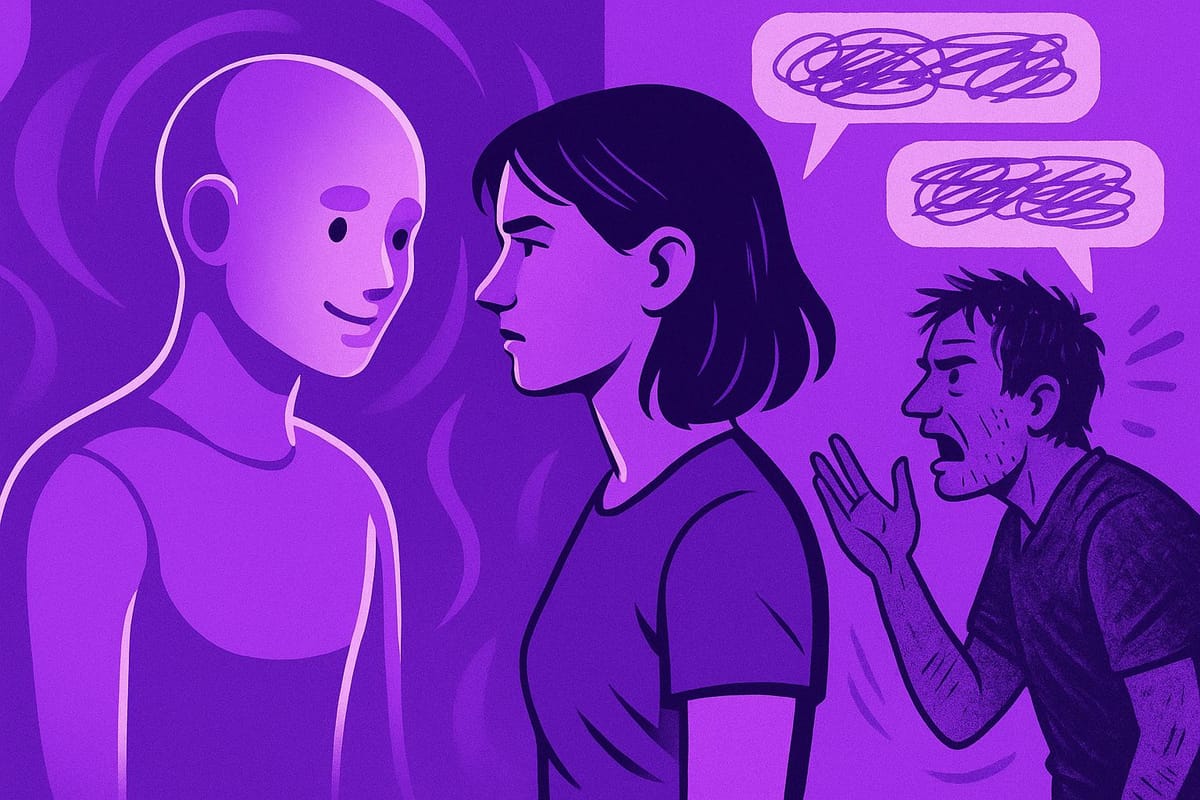
AI conversation practice is making some language learners worse in 2026, and yeah, that sounds backwards until you look at how these tools actually behave. They are fast, polite, patient, and optimized to keep you engaged. That is exactly why they can screw you. Real conversation is messy. AI conversation is often too clean. If you train only in clean conditions, your speaking falls apart the second reality gets rude.
Why AI conversation practice is making some language learners worse in 2026
Because friction disappeared. The bot waits forever, interprets your mangled sentence generously, and answers in clean, helpful language that flatters your confidence.
Sounds nice. It is also a trap.
Real conversations do not optimize for your growth. People interrupt. They mishear you. They get bored. They answer with slang. They do not politely mirror your level forever. If your practice environment never forces repair, your speaking gets soft.
The fake fluency loop nobody wants to admit
Here is the ugly pattern. You talk to AI. It feels smooth. You do more of it because it feels productive. Then you try a real conversation and suddenly your timing, confidence, and listening all collapse.
That is not because AI practice is useless. It is because you trained in a padded room.
This is the same basic delusion behind consistency theater and the obsession with comfort we roasted in productive struggle. Easy practice feels good right up until reality shows up.
How to make AI conversation practice brutal enough to help
- Ban safety rails: tell the AI not to simplify unless you ask.
- Force follow-up questions: every answer should trigger pressure, not praise.
- Use role tension: customer complaints, interviews, negotiations, disagreements.
- Record and relisten: if you never hear your own weak spots, you keep lying to yourself.
You also need short sessions with resets. Twenty focused minutes where the AI is instructed to be demanding will do more for you than two hours of pleasant chatbot cuddling.
The human benchmark still matters
You need a live test. Maybe that is a tutor, maybe a meetup, maybe voice notes with a friend, maybe ordering coffee where the stakes are low but real. Without that benchmark, AI can grade its own homework forever.
If you are going to use AI heavily, pair it with speaking before you feel ready and stop hiding behind passive input. The point is transfer. Everything else is cosplay.
The right question is not whether the bot understood you. The right question is whether a distracted human would.
A better rule for 2026
Use AI conversation for volume, not validation. Let it multiply reps, expose repeated mistakes, and create speaking frequency you could never afford with a human teacher alone.
But do not let the machine become your entire language environment. If the only listener in your life is a model designed to keep the conversation going, you are not training for communication. You are training for compliance.
Keyword research snapshot for AI conversation practice is making some language learners worse in 2026
This keyword works because it cuts against the default hype cycle. Everybody and their mother is publishing some version of AI will revolutionize language learning. Fine. Maybe. But contrarian search angles win clicks when they put a finger on the thing people are quietly worried about. A lot of learners have already felt the weird gap between sounding decent with AI and freezing with humans. They just have not seen it named clearly.
That is why this phrase has bite. It is specific, timely, and emotionally loaded. It also creates natural room for subtopics people are actively searching for, like AI speaking practice, voice mode for language learning, why AI feels easier than real conversation, and how to use AI without becoming dependent on it.
The hidden cost of frictionless practice
Frictionless practice feels efficient because it removes embarrassment. You can pause, retry, ask for help, and keep the conversation alive with almost no social consequence. For beginners, that can be useful. For everyone else, it can become a very polished avoidance strategy.
Language ability is not just about sentence formation. It is also about timing, ambiguity tolerance, emotional regulation, and the willingness to keep going when understanding breaks down. Those are exactly the parts that hyper-accommodating AI can undertrain. It catches you too gently. It waits too kindly. It rescues you too fast.
What to do instead of quitting AI altogether
The answer is not to ditch the tools and go live in a cave with a grammar book. The answer is to use AI like resistance training. Add difficulty. Add surprise. Add social pressure where you can. Force the model to behave less like a concierge and more like a distracted human with somewhere else to be.
Then go test transfer quickly. Send voice notes. Join a meetup. Ask a real person a question. Order something. Negotiate something. Tell a story. The longer you wait between AI practice and human contact, the easier it is to keep believing your own inflated self-assessment.
The rebel standard for AI speaking practice in 2026
If the tool makes you practice more, exposes your weak patterns, and pushes you back into messy human interaction, it is helping. If it becomes the place where you feel fluent without ever taking that fluency into the wild, it is sabotaging you. Same tech, opposite result.
That is the whole point. Tools are not honest. Outcomes are. If your real conversations are getting easier, keep going. If they are not, stop worshipping convenience and fix the training environment.
Three signs your AI speaking practice has gone soft
First, you are getting better at continuing conversations without getting better at starting them. That means the model is carrying the burden of momentum for you. Second, you feel articulate when the topic is familiar but fragile the second a human changes direction. Third, your confidence crashes in public even though your app sessions feel strong. That mismatch is the tell.
The fix is not mysterious. Start more conversations from zero. Practice cold openings. Practice clarification moves. Practice buying time without panicking. Practice disagreeing. These are small interaction muscles, but they are exactly what make real speech feel alive instead of scripted.
How to audit whether your AI practice is transferring
Use one simple weekly scorecard. Did you speak to one real person this week without scripting the interaction first? Did you survive at least one moment of confusion without switching to English? Did you notice a phrase or repair strategy from AI practice show up naturally in human conversation? If the answer is no across the board, your system is too comfortable.
You do not need perfect metrics. You need a reality check. A language method that never touches the real world is not a method. It is entertainment with educational branding.
Further reading and tools
- speak before you feel ready
- productive struggle
- consistency theater
- passive input cop-out
- OpenAI voice mode
- Gemini Live
- Research on AI conversational agents in language learning
- British Council on speaking practice
- Frontiers review on AI for language education
Where are you still hiding behind smooth practice instead of testing your language with a real human who might not meet you halfway?