Language Learning Comfort Trap: Why Easy Study Feels Productive and Still Leaves You Mute
The language learning comfort trap is what happens when you build a routine optimized for convenience instead of speaking pressure, retrieval, and real transfer.
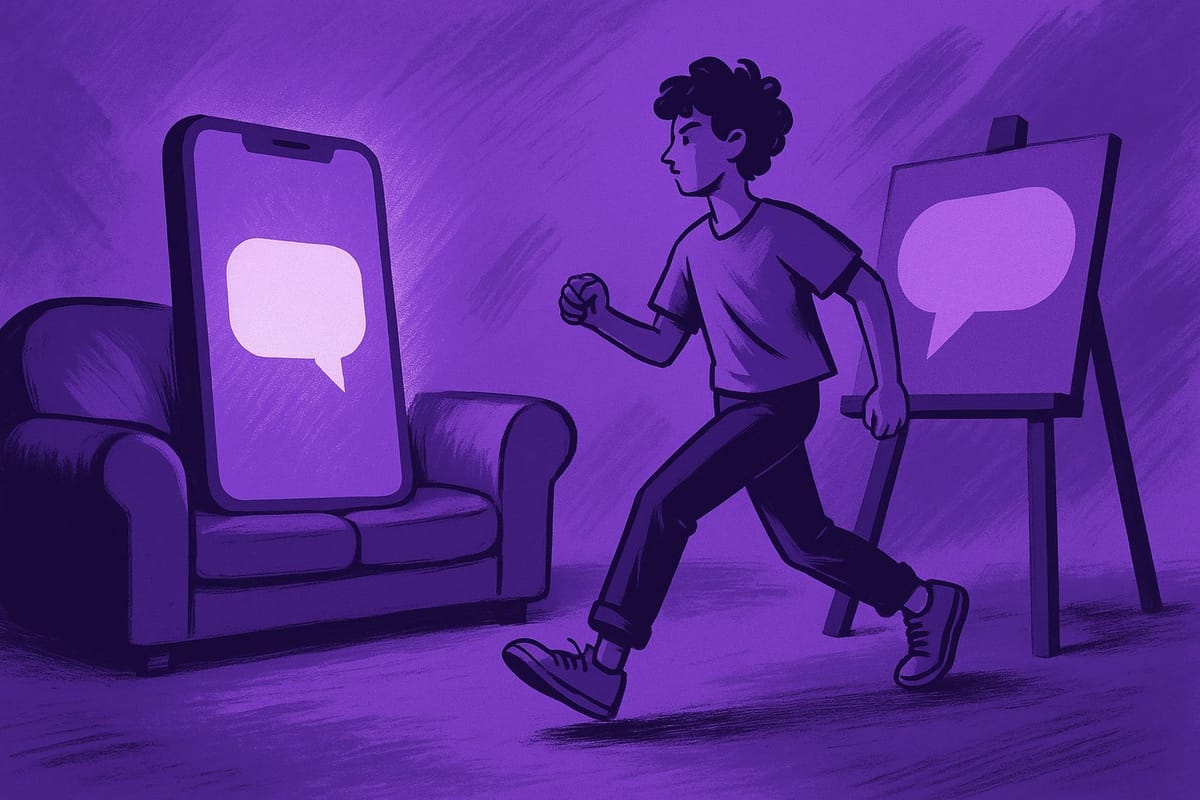
Language Learning Comfort Trap: Why Easy Study Feels Productive and Still Leaves You Mute
The language learning comfort trap is one of the biggest reasons smart, motivated people stay stuck for years. They are not lazy. They are not unserious. They are just trapped in a study routine designed to feel smooth, clean, and emotionally safe. And because it feels safe, it also feels productive.
That is the scam.
Easy study gives you completion without consequence. You tap a few buttons, review a few cards, watch a few videos, maybe say one sentence into the void, and walk away with the warm little glow of having “done your languages today.” Then a real human asks you a basic question and your brain turns into mashed potatoes.
If that sounds familiar, you are not broken. You are caught in the language learning comfort trap, which means your routine is optimized for convenience instead of transfer.
What the language learning comfort trap actually is
The language learning comfort trap happens when your study system removes so much friction that it also removes the conditions that force growth.
Those conditions are not mystical. They are boring and brutal:
- retrieval under pressure
- production before you feel ready
- exposure to messy real input
- correction that actually stings a little
- repetition that requires attention instead of autopilot
When those ingredients disappear, your routine becomes maintenance theater.
This is exactly why language learning streaks lie to you. The streak says you showed up. It says nothing about whether you trained the skill that matters.
The research is pretty clear on this. Retrieval practice, desirable difficulty, and transfer-appropriate processing all point in the same direction: effortful processing beats frictionless review when the goal is flexible use, not temporary recognition. Robert Bjork’s work on desirable difficulties is still the cleanest lens for understanding why easy learning often produces weak retention (https://bjorklab.psych.ucla.edu/research/). The Learning Scientists also do a solid job translating that research into plain English (https://www.learningscientists.org/desirable-difficulties).
Why easy study feels so convincing
Because your brain is not stupid. It is economical.
It loves routines that offer:
- fast wins
- low embarrassment
- measurable completion
- minimal uncertainty
Apps know this. Platforms know this. Productivity influencers definitely know this. They wrap language study in enough points, streaks, dashboards, and tiny tasks that you can feel accomplished without ever confronting the thing you are supposedly training.
That is part of why language learning app burnout happens. The loop gets optimized for retention of the user, not progress of the learner.
The comfort trap is seductive because it gives you three illusions at once.
Illusion 1: recognition equals mastery
You see a word and think, yeah I know that. Then you try to say it in conversation and it vanishes.
Illusion 2: repetition equals challenge
Doing the same easy thing every day is not automatically disciplined. Sometimes it is just hiding with a calendar.
Illusion 3: clarity equals readiness
People think, “once I understand it perfectly, then I will speak.” No. Speaking is one of the ways you become clear.
That is why comprehensible output matters so much. Output exposes the cracks that comfort keeps hidden.
The signs you are stuck in the language learning comfort trap
You probably know already, but here is the ugly checklist.
H2 You consume more than you produce
You are always reading, watching, listening, organizing, researching, planning, highlighting. Cute. How much speaking did you do this week?
H2 You avoid tasks that create visible failure
You will happily do vocabulary review for 45 minutes but somehow never record a one-minute monologue. Weird.
H2 Your routine is infinitely sustainable because it is barely training anything
This is the quiet tell. If your system feels effortlessly pleasant every single day, odds are it is under-dosed.
H2 You keep changing tools instead of changing behavior
New notebook. New app. New dashboard. New AI prompt. Same silence.
H2 You tell yourself confidence has to come first
Confidence is usually the receipt, not the purchase.
This is also why the language islands method works. It creates manageable speaking pressure instead of waiting for mythical total readiness.
The difference between useful struggle and stupid struggle
Now, before somebody gets dramatic, I am not saying all hard study is good. Plenty of language learners make the opposite mistake and build routines so chaotic or punishing that they quit in a week.
Useful struggle has three qualities.
It is specific
You know what you are trying to improve. For example:
- retell a short story without notes
- survive a five-minute conversation on one theme
- recall yesterday’s phrases from memory
- shadow one dialogue until the rhythm stops sounding broken
It is recoverable
You can fail, reset, and try again tomorrow. You are not throwing yourself into an hour-long public debate in week two.
It transfers
The task makes future speaking, listening, or writing easier in the real world.
Stupid struggle is the opposite. It is vague, punishing, and impossible to connect to actual communication.
If you want a cleaner example of the right kind of friction, look at productive struggle in language learning. That article makes the same point with less mercy.
How to escape the language learning comfort trap without hating your life
You do not need to become a grindset weirdo. You need to rebalance the ratio.
Try this.
H2 Rule 1: Every study session needs one transfer task
A transfer task forces knowledge to move.
Examples:
- summarize what you read out loud
- answer five unpredictable questions
- send a voice note
- do a two-minute monologue using new vocabulary
- rewrite a dialogue from memory
Without a transfer task, your session is mostly prep.
H2 Rule 2: Put output before cleanup
Stop waiting until everything feels neat. Speak with partial knowledge. Write with gaps. Let your mouth embarrass your brain a little.
This is the same spirit behind breaking traditional language learning rules. Order matters. Output belongs earlier than most people think.
H2 Rule 3: Keep some friction in the room
No subtitles all the time. No pausing every seven seconds. No instant dictionary rescue for every unknown word. Sometimes you need to sit in the discomfort long enough to actually process.
Research on tolerance of ambiguity and deeper processing in language learning keeps supporting this broader point. Learners who can sit with partial understanding often end up developing stronger inferencing and resilience. TESOL and related journals have been saying versions of this for years (https://tesol.org/).
H2 Rule 4: Track courage metrics, not just completion metrics
Instead of tracking only time spent, also track:
- minutes spoken
- number of unscripted sentences produced
- number of clarifications requested
- number of times you used a phrase in a live context
That is the stuff that predicts whether you are becoming usable.
H2 Rule 5: Make comfort earn its place
Comfort is not evil. Recovery matters. Low-intensity review matters. But it should support the hard stuff, not replace it.
Think of comfort like warm-up sets at the gym. Fine. Useful, even. But if all you ever do is warm up, you are not training.
A weekly anti-comfort routine that actually builds speech
Here is a cleaner setup than the average app hamster wheel.
Monday, input plus retell
Read or watch something short. Retell it from memory for two minutes.
Tuesday, phrase mining plus live usage
Pull five chunks from real content and use all five in spoken sentences.
Wednesday, conversation discomfort day
Do one live session, voice note exchange, or AI conversation where you cannot script everything.
Thursday, repair day
Review what broke. Fix pronunciation, missing vocabulary, or bad syntax. Then test again.
Friday, output sprint
Three one-minute monologues on familiar topics. No notes.
Weekend, light review and one fun exposure block
This is sustainable because it mixes intensity and recovery. But it still respects reality: if you want to speak, your week has to contain speaking.
The blunt truth
The language learning comfort trap survives because it flatters you. It lets you believe you are committed while protecting you from the exact situations that would reveal whether your learning transfers.
That is why people spend months “studying” and still cannot order lunch without internal collapse.
You do not need more motivation. You need more honest task design.
Keep some easy review if you want. Just stop mistaking it for the main event. The real work starts when the task asks something from you, not when it merely lets you recognize what you have already seen.
So here is the question: what part of your current routine feels suspiciously comfortable, and what would happen if you replaced just 15 minutes of it with something that could actually make you speak?