AI Speaking Practice Is Too Comfortable in 2026: Why Smooth Feedback Can Still Leave You Useless in Real Conversation
AI speaking practice is too comfortable in 2026 when it removes the friction and transfer pressure real conversations require.
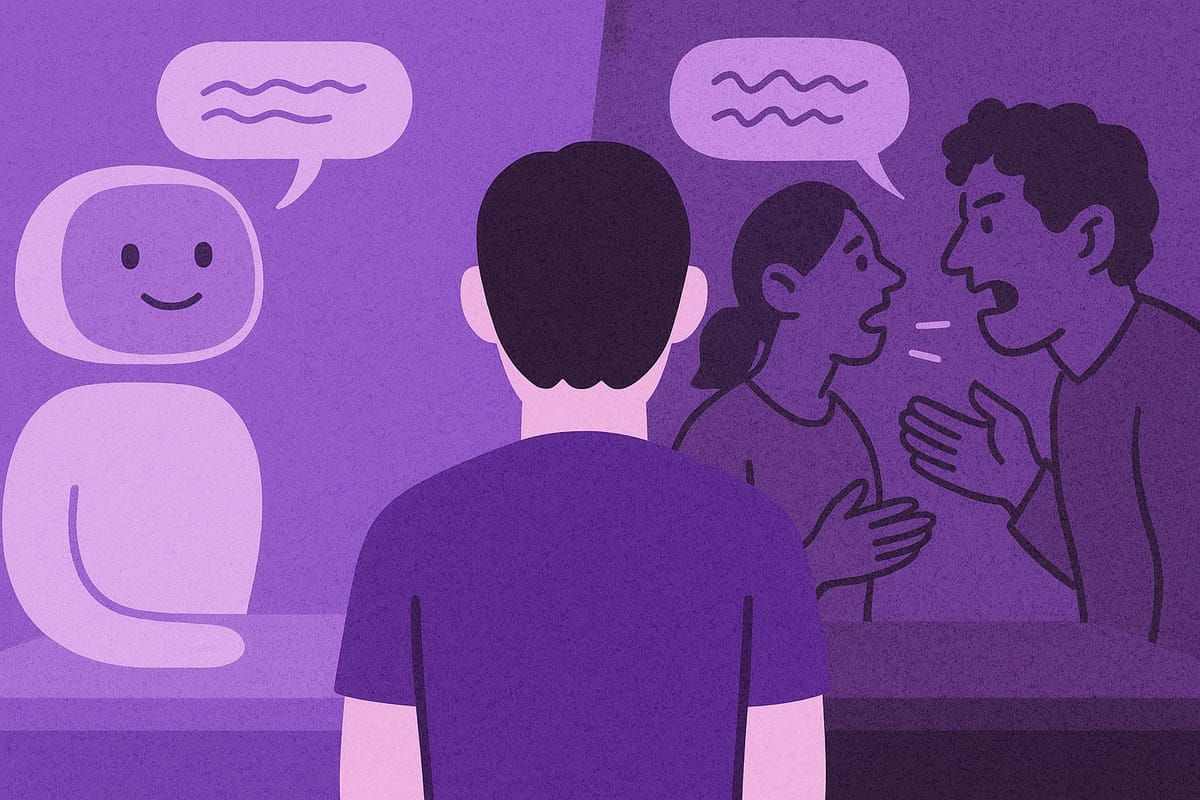
AI speaking practice is too comfortable in 2026, and that comfort is screwing a lot of learners. The tools are faster, friendlier, and more available than ever. They will wait for you, forgive your weird phrasing, reward your half-formed answer, and keep the vibe supportive the whole time. Sounds lovely. Also sounds nothing like real conversation.
That is the problem.
If your speaking system is built mostly on low-friction AI practice, you can rack up hours and still crumble the moment a real human interrupts, speaks too fast, or does not politely drag your sentence across the finish line. Comfort feels productive, but in speaking practice it can become a very polished form of avoidance.
So let’s say it cleanly. AI speaking practice is too comfortable in 2026 because it often removes the exact tension that makes speech transferable.
Why comfortable speaking practice creates weak language
Language is not just recall. It is recall under pressure.
You do not need perfect pressure all the time, but you need some. Otherwise you train in a padded room and act shocked when reality has elbows.
The current generation of AI speaking tools is excellent at three things:
- availability
- patience
- adaptation
Those are useful qualities for frequency. They are terrible qualities if they become your entire training environment.
A machine designed to keep you engaged will usually do all kinds of generous things a real person will not:
- infer what you meant
- wait through long silences without social consequence
- respond in cleaner language than real life usually gives you
- avoid showing boredom, confusion, or impatience
- quietly steer the conversation toward success
That can create the illusion of growth while leaving your actual conversation resilience undertrained.
AI speaking practice is too comfortable in 2026 because friction disappeared
Friction gets a bad rap because it feels unpleasant. But in language learning, some friction is the whole damn point.
Useful friction looks like this:
- not finding the word quickly enough
- having to clarify when misunderstood
- losing the thread, then rebuilding it
- hearing a response you did not expect
- dealing with interruption or topic drift
- choosing between polite, casual, and direct phrasing on the fly
When practice removes all of that, it stops preparing you for human interaction.
That is why this topic matters now. Search behavior around AI voice tutors, AI conversation tools, and AI speaking feedback keeps rising, but so does the quieter anxiety underneath it: why do I feel decent with AI and shaky with people? That gap is exactly what this long-tail keyword hits. It is contrarian, timely, and painfully recognizable.
The fake fluency loop
Here is the pattern.
You practice with AI. It goes smoothly. You feel capable. You do more of it because it feels efficient and low stress. Then you try a real conversation and get punched in the mouth by speed, ambiguity, and social pressure.
Now you feel worse than before, not because the tool was useless, but because it trained the wrong thing too gently.
We already roasted adjacent versions of this problem in false progress and waiting to feel ready. Same disease, shinier packaging. You confuse activity with transfer, then wonder why you are still not dangerous in the wild.
What AI speaking tools are actually good for
Let’s not be idiots about it. AI speaking tools are useful. Very useful, in fact.
They are great for:
- increasing speaking frequency
- rehearsing scenarios before you do them live
- identifying repeated grammar or pronunciation mistakes
- building confidence at the very start of output practice
- giving introverts a lower-pressure entry point to speaking
That is real value. The issue is not the tool. The issue is worshipping the tool as if it can replace social reality.
If you use AI for volume, it helps. If you use it for validation, it lies to you.
How to make AI speaking practice less soft
You do not need to quit AI. You need to stop letting it coddle you.
1. Tell the model to stop rescuing weak answers
Use prompts like:
- Do not simplify unless I ask.
- Interrupt me if my answer is vague or too long.
- Respond like a normal busy person, not a tutor.
- If I sound unclear, make me clarify before moving on.
- Track recurring problems and show them to me after the session.
That alone toughens the environment immediately.
2. Use tense scenarios, not cozy ones
Stop spending all your time on low-stakes café orders and cheerful introductions.
Practice scenes like:
- complaining about a billing error
- explaining a delay to a coworker
- disagreeing in a meeting
- asking a landlord about repairs
- clarifying travel problems at a station or airport
- telling a story while someone interrupts with questions
Those scenes force precision and recovery.
3. Redo the same conversation after feedback
One of the most effective moves in any speaking system is the second attempt. First attempt shows where you break. Feedback names the problem. Second attempt makes the repair real.
This is where AI can be brilliant. It gives you a do-over without social exhaustion. Use that strength.
4. Add time pressure
Tell the AI to keep responses short and natural, ask follow-up questions quickly, or limit your answer length. If you always have forever to think, you are training writing speed, not speaking speed.
A 20-minute anti-comfort speaking routine
If your current system feels too smooth, use this instead.
Minute 1 to 2: choose one uncomfortable scene
Something with consequences or tension.
Minute 3 to 10: first live run
Speak without notes. No pausing to craft the prettiest sentence on earth.
Minute 11 to 14: review the damage
Ask the AI for:
- moments where a real human would be confused
- filler words or delays that hurt clarity
- top grammar problem
- top phrasing upgrade
- one place where your tone felt off
Minute 15 to 20: second run with more pressure
Redo the scene, but tell the AI to interrupt more, ask for clarification, or disagree harder.
That routine is short enough to sustain and harsh enough to matter.
AI speaking practice is too comfortable in 2026 because it protects your ego
Here is the part nobody likes saying out loud. Comfortable AI practice can become an emotional hiding place.
You get to feel diligent without risking embarrassment. You get the rhythm of conversation without the social cost of misunderstanding. You get praise without real scrutiny.
That makes it seductive as hell.
But speaking ability grows when your ego survives contact with confusion. Not humiliation, not abuse, just ordinary messy communication where things do not land perfectly and you keep going anyway.
That is why AI conversation practice backlash is real. Not because the tools are bad, but because learners can use them to avoid the very discomfort that builds speech.
Three signs your AI speaking routine has gone soft
You feel better at continuing conversations than starting them
That usually means the tool keeps handing you clean openings and momentum. Real life often does not.
You sound good on familiar topics and shaky the second someone goes off-script
That means your speaking is scene-bound, not flexible.
You rarely test yourself with humans
This is the big one. If you keep postponing real-world contact, your practice system is probably too comfortable.
How to audit transfer instead of vibes
Once a week, ask yourself three questions.
- Did I speak with one real person without scripting it first?
- Did I survive one moment of confusion without bailing immediately?
- Did something I practiced in AI show up naturally in a human interaction?
If the answer is no across the board, then your routine may be polished, but it is not paying rent.
This works nicely alongside small speaking scripts because scripts are useful only if you then stress-test them in reality.
The right role for AI in a rebel speaking system
Use AI for what it does best.
- reps you can get on demand
- targeted scenario practice
- recurring mistake detection
- low-cost repetition before live use
Then pair it with what AI cannot give you fully.
- unpredictable human timing
- real social pressure
- messy audio and slang
- emotional stakes
- the possibility that someone just does not meet you halfway
That mix is what produces usable language.
The keyword opportunity behind this topic
This keyword works because it names a tension the hype cycle keeps glossing over. Search interest around AI speaking tools is rising, but a lot of the existing content is breathless and shallow, mostly “best apps” sludge and generic optimism. A title that says AI speaking practice is too comfortable in 2026 cuts straight into the emotional truth many learners already feel.
It is also fertile for related searches: fake fluency, AI speaking feedback, why AI conversation feels easier than real life, how to make AI practice harder, how to test transfer, and whether voice mode actually helps speaking. That gives the post strong long-tail relevance without sounding like a machine coughed it up.
What serious learners should do now
Keep the tools. Drop the delusion.
Make your AI speaking practice harder, shorter, and more specific. Use it to expose recurring breakdowns, not to soak in artificial encouragement. Then move into human conversation before your confidence turns into decorative nonsense.
Because that is the standard. Not whether the bot understood you. Whether a distracted, impatient, completely normal human would.
Further reading and sources
- AI conversation practice backlash
- Language learning false progress
- Speaking anxiety and waiting to feel ready
- Language islands method
- OpenAI voice features
- Google Gemini Live
- Frontiers review on AI for language education
- Research on AI conversational agents in language learning
- British Council on speaking practice
If your AI speaking sessions feel smooth but your real conversations still wobble, what exactly are you training, language skill or comfort addiction?