Language Learning With Video Games in 2026: The Anti-Textbook Immersion Plan That Makes You Forget You're Studying
Language learning with video games works when you use games as purposeful immersion instead of background entertainment. Here is the anti-textbook plan that actually transfers.
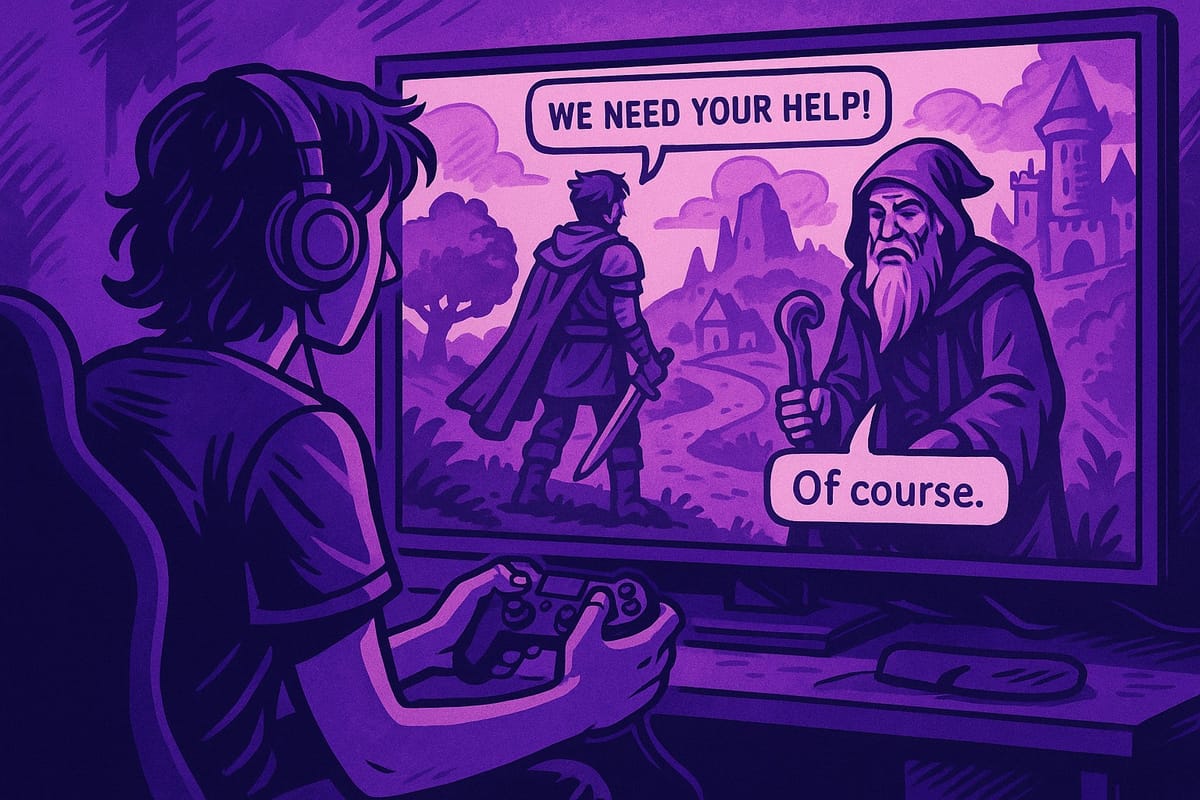
Language learning with video games works for one reason traditional study people hate admitting: when you are genuinely engaged, you stop begging your brain to pay attention. You are not staring at a worksheet trying to manufacture motivation. You are chasing a quest, surviving a boss fight, building a farm, joining a raid, solving a mystery, or trying not to get smoked in ranked matches. That is real attention, and real attention changes what sticks.
So yes, language learning with video games can absolutely help. But no, it is not magic. If you use games as pure background entertainment, you will get some exposure and not much transfer. If you use them with a little strategy, they become one of the best anti-textbook immersion tools around.
This is especially powerful if you already know that passive listening for language learning is not enough, that you need to stop translating in your head, and that pronunciation perfectionism is just fear in nicer clothes. Games give you repeated, emotional, contextual language. That is gold if you stop using them like wallpaper.
Why language learning with video games works when textbooks stop working
There is a reason researchers and educators keep revisiting games. Search results in 2025 and 2026 keep pointing to the same conclusions: games help with motivation, vocabulary retention, and contextual learning when the design creates meaningful repetition.
A Pearson article on learning with video games highlights real-time communication, motivation, and contextual learning. A recent MDPI bibliometric analysis points to vocabulary acquisition, immersion, and learner engagement as recurring strengths. A newer meta-analysis in Computer Assisted Language Learning makes the point that game-based learning can help, but the gains depend on design, context, and how the learner actually uses the medium.
That is the key. The game is not the method. Your interaction with the game is the method.
Games can be great because they deliver:
- repeated vocabulary in a meaningful context
- immediate feedback from action and consequence
- strong emotional memory hooks
- high motivation without artificial discipline tricks
- real communication in multiplayer settings
Textbooks usually give you tidy examples. Games give you reasons to care. And caring matters more than most people want to admit.
What kind of games work best for language learning with video games
Not every game is useful. Some are chaos machines. Some have almost no language. Some move too fast for your level.
The best games for language learning with video games usually have one or more of these features:
- lots of dialogue
- subtitles or interface language options
- repeated mission structures
- inventory, crafting, trading, or social systems
- clear contextual clues
- enough slowness to let you notice language
Best genres for beginners and lower-intermediate learners
- life sims
- visual novels
- turn-based RPGs
- management sims
- point-and-click adventures
These give you time to breathe.
Best genres for intermediate learners
- story-heavy action RPGs
- cozy online games
- survival games with repeated task language
- MMO quest systems
These give you repetition plus emotional engagement.
Best genres for advanced learners
- competitive multiplayer games with voice chat
- roleplay servers
- strategy games with team coordination
- deep narrative games with dialect or humor
These can expose you to messy, fast, real language. Which is great if you are ready for the mess.
Why language learning with video games beats fake productivity
A lot of learners love tools that feel productive because they are measurable. Streaks. checkboxes. green bars. Tiny dopamine pellets.
Games can be different in a useful way. They force language to do something.
If you need to:
- understand a quest objective
- buy an item
- negotiate with teammates
- read lore for a puzzle
- react to voice chat in real time
then language is not decoration. It is functional. You are using it under light pressure, which is much closer to actual life.
That pressure matters. It reduces overthinking. You do not have time to parse every sentence like it is a museum artifact. You learn to grab meaning fast.
That makes games a sneaky bridge between comprehension and response. And that bridge is exactly where a lot of traditional learners stay stuck.
How to use language learning with video games without turning it into fake productivity
Here is where people screw this up.
They either:
- play normally and claim it counts as study
- or over-instrument the whole thing until it stops being fun and they quit
The fix is a middle path.
Use one target goal per session
Pick one:
- follow quest text without translation
- learn ten interface phrases
- notice how characters soften requests
- survive one multiplayer session using voice chat
- mine five reusable sentences
That gives your session teeth without killing the fun.
Keep a tiny capture habit
Do not pause every thirty seconds like a lunatic. But when something useful repeats, grab it.
Good examples:
- healing and damage phrases
- movement instructions
- negotiation language
- emotional reactions
- apology and repair language in multiplayer chat
Recycle what you collect
A line from a game becomes valuable when you reuse the structure somewhere else.
For example:
- “We need to head back before it gets dark.”
- “We need to check that before we leave.”
- “We need to figure this out now.”
That is how game language stops being niche and starts becoming yours.
Keep subtitles strategic
If you are a beginner, subtitles help. If you are intermediate, use them as scaffolding, not a permanent crutch. Toggle them off sometimes. Do audio-first replays when possible.
Use repeated content on purpose
Grinding the same mission a few times is not always glamorous, but repetition is how patterns sink in. In language learning terms, repetition with context is a cheat code.
The best setup for language learning with video games in 2026
You do not need a maniac setup. Keep it simple.
Option 1: Story mode setup
- one dialogue-heavy game in your target language
- subtitles on at first
- notebook or phone nearby
- five useful lines captured per session
Option 2: Multiplayer setup
- one cooperative game
- text or voice chat enabled
- one communication goal per session
- short post-session recap of phrases you heard or used
Option 3: Chill consistency setup
- one cozy or sim game
- target-language interface
- 20 to 30 minutes, four times a week
- light review of repeated vocabulary
If you buy games on platforms like Steam or other official storefronts, check language support before you commit. Some games offer full interface, subtitles, and audio in your target language. Others barely offer subtitles and call it a day.
Mistakes people make with language learning with video games
Picking games that are way above their level
If everything is incomprehensible, you are not immersing. You are drowning with better graphics.
Playing for six hours and extracting nothing
Enjoyment matters, but if you want learning gains, you need a tiny bit of intentionality.
Only reading and never speaking
Multiplayer or read-aloud repetition is where a lot of transfer happens. Silent comprehension has limits.
Treating niche game vocabulary like the main event
Yes, you learned “mana crystal,” “siege workshop,” and “inventory capacity.” Great. Now also notice the everyday language wrapped around it.
Quitting because you do not understand everything
You do not need total comprehension. You need enough understanding to keep playing and enough repetition for patterns to emerge.
A brutally effective weekly plan
If you want results, do this for one month.
Three days a week
Play 30 to 45 minutes in the target language.
After each session
Write down:
- 5 new phrases
- 2 repeated structures
- 1 line you want to reuse in real life
Once a week
- replay one scene or quest section
- read your captured phrases aloud
- use three of them in voice notes or conversation
That is it. Not sexy, but it works.
The real value of language learning with video games
The real value is not that games replace every other method. It is that they make immersion easier to sustain.
People stay with what they enjoy. That matters more than purity cults in language learning circles want to admit. If a game keeps you engaged long enough to notice patterns, build vocabulary, react faster, and lower your translation habit, it is doing honest work.
And honestly, a lot of traditional study systems are so boring they train avoidance. Then people blame themselves for lacking discipline. Screw that. Build a system you will actually return to.
So yes, language learning with video games is legitimate. But use it like a tool, not an excuse. Pick the right game. Set one goal. Capture a few lines. Reuse what you learn. Keep moving.
If you had to choose one game this month to turn into a language lab, what would it be, and are you actually going to play it in the target language or keep chickening out with English settings?