How to Stop Being Afraid to Speak a Language in 2026: The Deliberate-Discomfort Method
How to stop being afraid to speak a language has very little to do with waiting for confidence and a lot to do with repeated ugly reps. This guide shows the deliberate-discomfort method for adults who are done hiding.
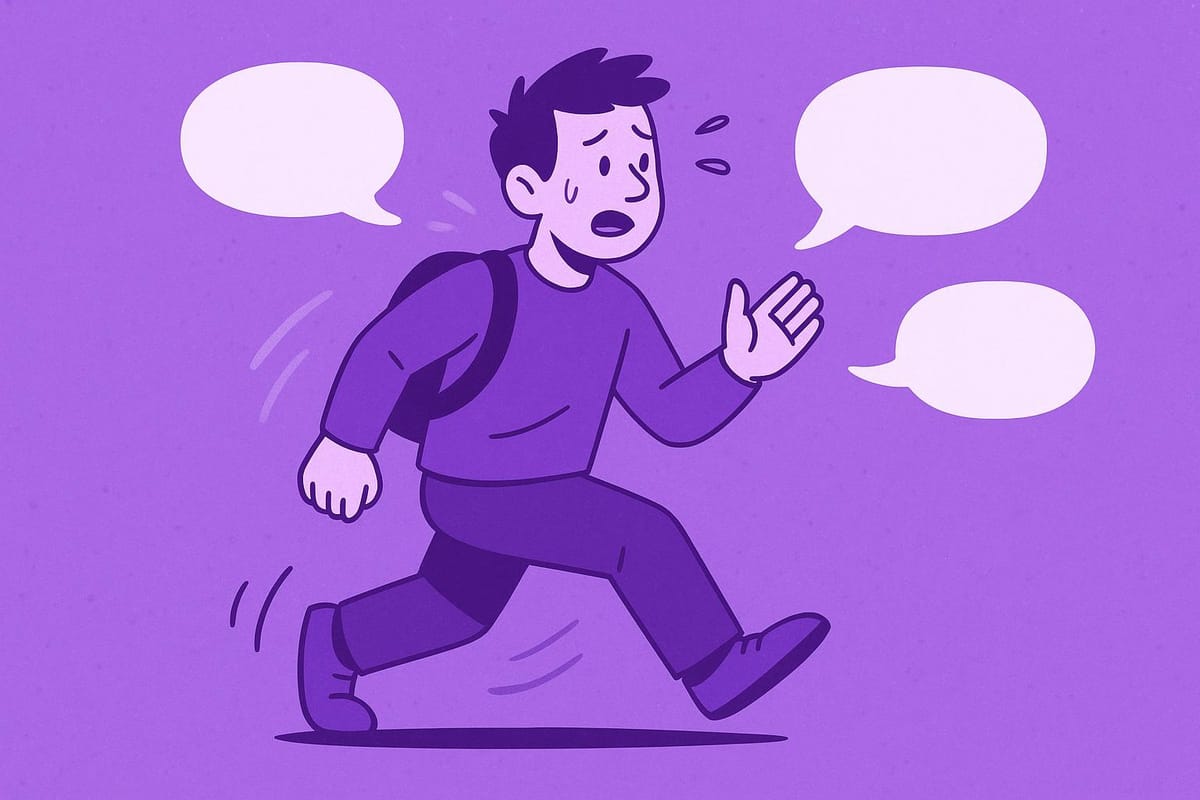
How to stop being afraid to speak a language has almost nothing to do with waiting until you feel calm, inspired, worthy, or “more fluent.” That is the lie. The fear usually sticks around precisely because you keep feeding it with avoidance. You study quietly, consume more input, tell yourself you are preparing, and then freeze the second another human being enters the scene. If that sounds familiar, good. At least we are talking about the real problem. How to stop being afraid to speak a language is not a confidence hack. It is an exposure problem.
If you have already tried speaking confidence exercises in a foreign language, worked on stop translating in your head, or realized your accent anxiety is tied to pronunciation perfectionism, then you are ready for the next step. How to stop being afraid to speak a language comes down to building deliberate discomfort in a way that is controlled, repeatable, and hard to dodge. Ugly reps first. Confidence later.
Why how to stop being afraid to speak a language is really an avoidance problem
Fear of speaking feels like a personality issue. It is usually a behavioral issue. You avoid speaking, which keeps speaking unfamiliar, which keeps it scary, which makes you avoid it more. That loop is old as hell, and it does not care how many grammar chapters you finish.
Psychology is pretty clear that avoidance strengthens anxiety over time, while gradual exposure helps weaken it. That is why guidance from the American Psychological Association and the National Institute of Mental Health keeps circling the same principle: repeated contact with the feared thing in manageable doses changes the response. Language learners hate hearing this because it sounds too simple. But that is exactly why it works.
Speaking frameworks like the ACTFL Proficiency Guidelines and the CEFR also make the point indirectly. Speaking ability is measured through tasks, interaction, and real-time meaning-making. Nobody gets a medal for silent understanding.
How to stop being afraid to speak a language by using deliberate discomfort
How to stop being afraid to speak a language gets easier when you stop treating fear as a sign to retreat and start treating it as a sign that you found the right practice zone. Not panic-level distress. Not trauma cosplay. Just enough discomfort that your brain notices it and learns you survived anyway.
That is what I mean by the deliberate-discomfort method. You intentionally create short speaking reps that are uncomfortable enough to matter but small enough to repeat. This is the opposite of waiting until you feel brave. It is how bravery gets built.
The deliberate-discomfort scale
Rank speaking situations from 1 to 10.
- 1 to 3: talking to yourself, reading aloud, recording voice notes
- 4 to 5: sending audio messages, answering predictable questions, short role plays
- 6 to 7: ordering, asking follow-up questions, short live exchanges
- 8 to 10: open-ended conversation, group talk, speaking in front of multiple people
Most stuck learners keep living in levels 1 to 3 and wondering why 7 feels terrifying. Because you never trained the middle. That middle is where fear gets smaller.
How to stop being afraid to speak a language with a weekly exposure ladder
Here is the simplest useful system.
Day 1: controlled output
Record three thirty-second voice notes answering easy prompts:
- What did you do today?
- What are you working on this week?
- What do you want to improve in the language?
Do not chase elegance. You are warming up the output engine.
Day 2: visible imperfection
Send one short audio message to a tutor, exchange partner, or language friend instead of typing. The point is not quality. The point is being heard.
Day 3: prompt-and-answer reps
Use five predictable questions and answer each one out loud twice. The second answer should be smoother than the first. That tiny improvement teaches your brain that repetition works better than panic.
Day 4: live micro-interaction
Have one real exchange that lasts at least twenty seconds longer than you usually tolerate. Order something, ask a follow-up, make a comment, or react to the answer instead of escaping immediately.
Day 5: messy monologue
Talk for two minutes on one topic without restarting every sentence. This is where a lot of learners discover they are not actually lacking knowledge as much as they are addicted to self-interruption.
Day 6: uncomfortable but survivable conversation
Do one five- to ten-minute live speaking block. Not because it will be pretty. Because it will be survivable. That distinction matters.
Day 7: review the fear honestly
Write down:
- what felt worst beforehand
- what actually happened
- what was less terrible than expected
- what level you should repeat next week
You are training evidence, not mood.
Best drills for how to stop being afraid to speak a language
The right drills are the ones that make avoidance harder.
1. The no-restart rule
Pick a one-minute response and forbid yourself from starting over. If you make a mistake, repair it and keep moving. This kills perfectionist momentum fast.
2. The ugly-first take
Your first answer is allowed to be rough. Actually, it should be rough. The whole point is learning that a bad first take does not mean the session failed. If you need a reminder, go reread why mistakes are your superpower.
3. The follow-up question habit
Most anxious learners escape as soon as they complete the minimum transaction. Push one step farther. Ask one follow-up question. Keep the interaction alive just a little longer.
4. The opinion drill
Facts are easy. Opinions feel riskier. Give your opinion on a tiny topic every day:
- best place to work
- what you cooked
- a film you liked
- a tool you hate
Opinion language creates more real conversational muscle than endless self-introductions.
5. The stumble-and-recover drill
Practice saying:
- Let me say that another way.
- I do not know the word, but...
- What I mean is...
- I am not sure how to say this exactly.
Fear drops when you realize breakdown does not have to equal shutdown.
What makes speaking fear worse
If you want to stop feeding the problem, cut these habits.
Perfectionist pronunciation goals
If your standard is sounding nearly native before you feel allowed to talk, congratulations, you built a prison. Accent work is fine. Silence as a side effect is not.
All-input, no-risk study
Listening and reading matter. But if your routine is built entirely from activities that never expose you, your confidence will stay theoretical.
Overprotective conversation partners
Sometimes the issue is not you. It is the person who switches to English the second you wobble. Good for efficiency, bad for growth. Ask for patience. Or find better reps.
Catastrophic self-talk
You are not bombing a TED Talk. You are learning. The more dramatic your internal narration gets, the more speaking feels like danger instead of practice.
How to stop being afraid to speak a language before live conversations
A lot of people blow this part by either overpreparing or raw-dogging the conversation and hoping adrenaline will make them eloquent. Neither works especially well. A smarter move is a five-minute pre-conversation reset.
- pick one topic you are likely to discuss
- say three sentence starters out loud
- rehearse one recovery phrase for when you blank
- decide one follow-up question you will ask no matter what
That tiny prep routine gives you a foothold. It does not remove uncertainty, but it stops the conversation from feeling like a total ambush.
If you want extra support, structured speaking resources from the British Council can help you find level-appropriate topics and listening models without turning the whole process back into textbook theater.
Speaking myths that keep fear alive
Some beliefs sound responsible and are actually poison.
- "I should fix all my mistakes before speaking more." Wrong order. Speaking reveals which mistakes actually matter.
- "Confidence comes first." No. Evidence comes first. Confidence follows evidence.
- "If I embarrass myself once, people will remember forever." They will not. They have lives.
- "I need longer study before more output." Maybe sometimes, but usually that is fear wearing glasses and pretending to be strategy.
The best learners are not the ones with no fear. They are the ones who stop giving fear veto power.
How to know the deliberate-discomfort method is working
You will probably still feel nerves. That is normal. The difference is that the nerves stop running the meeting.
- You begin speaking sooner instead of waiting for the perfect sentence.
- You recover faster after mistakes.
- You stay in interactions a little longer.
- You need less mental buildup before speaking.
- You realize fear can be present without being in charge.
That last one is huge. The goal is not zero fear. The goal is useful behavior despite fear.
The no-BS answer to how to stop being afraid to speak a language
If you want the blunt truth, how to stop being afraid to speak a language is mostly about stopping your avoidance from masquerading as preparation. Study all you want, but if you do not build repeated exposure, the fear stays well-fed.
Use the deliberate-discomfort ladder. Pick a level that scares you a little. Repeat it until it gets boring. Then move up. Confidence is not a prerequisite for speaking. It is the receipt you get after enough speaking reps that did not kill you.
What is one speaking situation you have been dodging that is uncomfortable enough to matter but small enough to do in the next 24 hours?