Why You Freeze When Speaking a Foreign Language in 2026: The Panic Loop That Keeps You Quiet
Why you freeze when speaking a foreign language is usually not lack of talent. It’s a panic loop of perfectionism, slow retrieval, and over-monitoring.
Why You Freeze When Speaking a Foreign Language in 2026: The Panic Loop That Keeps You Quiet
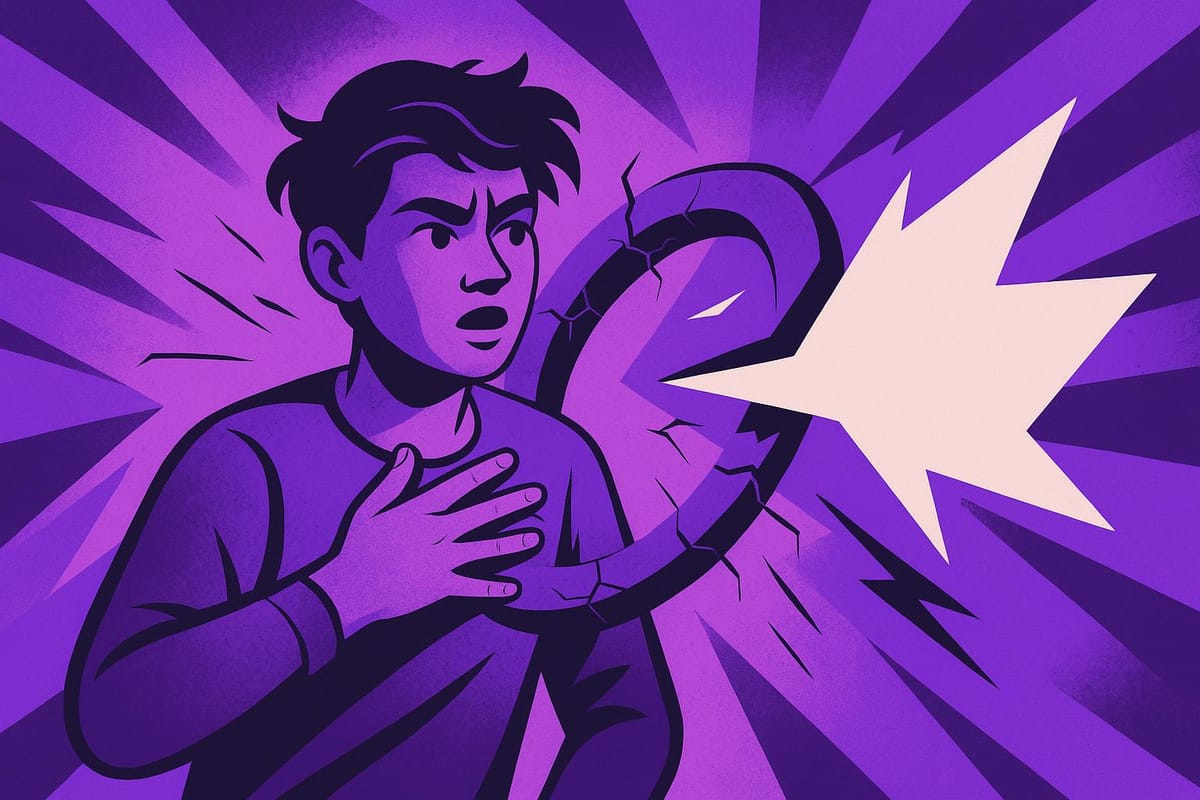
Why you freeze when speaking a foreign language usually has nothing to do with intelligence, talent, or some magical “language gene” you think other people got and you missed. What’s actually happening is uglier and more fixable: you get hit by a panic loop where perfectionism slows retrieval, slow retrieval triggers self-monitoring, and self-monitoring makes your mouth forget what your brain already knows.
You know the feeling. You can understand the podcast. You can read the article. You can even rehearse a decent sentence alone. Then a real human looks at you, waits half a second too long, and your brain turns into a Windows update from hell.
That freeze is not proof you’re bad at languages. It’s proof that speaking is a live performance under pressure, and your mental bandwidth is getting burned in the wrong places.
Search results around this topic keep circling the same symptoms: mental overload, stress, translation habits, second-language anxiety, the whole mess. Fair enough. But most advice still misses the core issue. The freeze is not one problem. It’s a loop.
And if you want to stop freezing, you need to break the loop instead of trying to “be more confident.” That advice is useless.
Why You Freeze When Speaking a Foreign Language Is Usually a Performance Problem, Not a Knowledge Problem
A lot of learners misdiagnose the problem. They think:
- I need more vocabulary
- I need better grammar first
- I should wait until I feel ready
- I need to stop making mistakes before I speak more
That logic sounds responsible. It’s also how people stay quiet for years.
Speaking is not a written exam. It’s a fast retrieval task under social pressure. You are pulling words, patterns, pronunciation, listening, turn-taking, and self-control together in real time. Even the CEFR treats speaking as a practical “can do” skill, not just stored knowledge. Knowing something and producing it on command are different games.
So if you can understand more than you can say, congratulations: you’re normal.
The problem starts when you treat that gap like a character flaw. Then every conversation becomes a test. Every pause feels like exposure. Every small mistake feels like evidence that you should shut up until you improve.
That’s the trap.
If this sounds familiar, read this with your ego turned off: your freeze is probably not caused by low ability. It’s caused by your brain trying to avoid embarrassment while you’re doing a cognitively expensive task in public.
Why You Freeze When Speaking a Foreign Language: The 3-Part Panic Loop
Here’s the model that actually explains what’s going on.
1. Perfectionism makes you reject the first usable sentence
You do not need the perfect sentence. You need a sentence that survives contact with reality.
But perfectionist learners keep trying to upgrade a simple thought into a polished masterpiece:
- “Is this the right tense?”
- “Is that preposition natural?”
- “What if my pronunciation sounds stupid?”
- “Maybe there’s a better word...”
By the time you’re done editing, the moment is gone.
This is the same poison behind pronunciation obsession. If that’s your flavor of self-sabotage, go read why pronunciation perfectionism keeps learners stuck. Clean pronunciation matters. Worshipping it does not.
2. Slow retrieval makes you panic
Then comes retrieval. You know the word somewhere, but it doesn’t show up fast enough. The delay feels dangerous. A one-second pause turns into “oh no, they can tell I’m faking it.”
This is where a lot of learners start blaming vocabulary size. Sometimes vocabulary is part of it, sure. But often the real issue is access speed, not total knowledge.
You can know 8,000 words and still freeze if your brain is dragging each one through customs before it lets it out.
And no, doing another hundred flashcards won’t automatically fix that. In fact, if your study life is too passive, you’re just getting better at recognition instead of production. That’s why chasing vocabulary with flashcards often fails to make you more speakable.
3. Over-monitoring hijacks the rest of your bandwidth
Once you notice the delay, you start watching yourself speak in real time like a hostile courtroom stenographer.
- How do I sound?
- Did they notice that pause?
- Was that mistake obvious?
- Should I restart the sentence?
Now you’re splitting your attention between speaking and judging yourself speaking. That’s brutal for working memory. Unsurprisingly, some anxiety-focused articles, including Fluently’s piece on speaking anxiety, point to the same pattern: pressure eats the mental resources you need to produce language in the first place.
So the loop looks like this:
- You try to speak
- You aim too high
- Retrieval slows down
- Stress spikes
- You monitor yourself harder
- Your output gets worse
- You take that as proof you should stay quiet next time
That’s why people can sound decent alone and freeze with actual humans. The issue isn’t purely linguistic. It’s interactive.
Why You Freeze When Speaking a Foreign Language Gets Worse When You Translate Everything First
Translation is not evil. Let’s kill that myth right now.
Beginners translate. Intermediate learners translate. Advanced learners still translate sometimes. The real problem is not that translation exists. The problem is when translation becomes a compulsory detour for every thought.
That’s also why the better advice from resources like StoryLearning’s piece on translating in your head is more useful than the usual fake Zen nonsense. You do not stop translating by yelling “just think in the language” at yourself. You reduce translation by making meaning, phrases, and responses more immediate through repeated use.
When you freeze, here’s what translation often looks like:
- You build the sentence in your native language
- You search for a perfect equivalent
- You reject simpler phrasing
- You stall
- You panic
That’s not careful. That’s inefficient.
If you want faster speaking, your goal is not “never translate again.” Your goal is “reach a workable response faster than your inner critic can wreck it.”
That means learning to say the easier sentence now instead of the elegant sentence never.
How to Break Why You Freeze When Speaking a Foreign Language in Real Conversations
Now we get to the useful part.
You do not fix this by reading motivation quotes. You fix it by changing the conditions under which your mouth has to operate.
1. Lower the quality bar during live speaking
Your new rule: in conversation, speed beats polish.
Not recklessness. Not gibberish. Just functional output first.
Replace “How do I say this perfectly?” with:
- What is the shortest version?
- What is the safer synonym?
- What can I say in seven words instead of seventeen?
This is basically exposure therapy for perfectionists. If you need help building tolerance for that discomfort, start with the deliberate discomfort method.
2. Train retrieval, not just recognition
A lot of learners live on input and call it speaking prep. That’s half true at best.
Input matters. But if you only consume, you’re rehearsing understanding, not deployment.
Use drills that force fast recall:
- 30-second answers to simple questions
- Retelling a short story without notes
- Describing your day out loud in plain language
- Shadowing short clips, then paraphrasing them
If you want a practical warm-up list, these speaking confidence exercises are a better use of your time than another passive study session.
3. Borrow pronunciation confidence instead of inventing it
Sometimes you freeze because you’re unsure how a word is supposed to land in the mouth. Fair. Fix it quickly and move on.
Use YouGlish to hear words and phrases in real context, and Forvo when you want quick pronunciation checks from native speakers. Don’t turn pronunciation research into a hobby. Use it as a wrench, not a religion.
4. Stop hiding inside AI-only practice
AI practice is useful. It is also dangerously comfortable if it becomes your whole speaking life.
Machines are patient. Real people interrupt, react, misunderstand, and move the conversation forward before you feel emotionally prepared. That friction is part of the skill.
If your practice environment is too soft, read why AI speaking practice can become too comfortable. You need a bridge from safe rehearsal to messy human exchange.
5. Use input that feeds speech, not avoidance
Podcasts are great if they turn into output. They’re garbage if they become another way to feel productive without ever talking.
Use short podcast segments to:
- steal useful phrases
- repeat them aloud
- summarize the idea in your own words
- argue with the speaker out loud like a lunatic
Honestly, that last one works. If you’re stuck in passive mode, here’s a smarter way to use podcasts for speaking growth.
A Simple Reset Script for the Moment You Freeze
When the panic loop starts, do not try to become a calmer person in 1.5 seconds. Just run a script.
- Pause once. One beat. Not an apology spiral.
- Choose the smaller sentence. Cut the idea in half.
- Use familiar words. Stop auditioning fancy vocabulary.
- Finish the turn. A flawed complete answer beats a perfect unfinished one.
- Do not autopsy it mid-conversation. Save the review for later.
That’s it. Boring, repeatable, effective.
Also: stop treating every conversation like a referendum on your identity. Nobody cares as much as you think. Most people are busy trying to say their own thing.
The Brutal Truth About Why You Freeze When Speaking a Foreign Language
The brutal truth is this: if you keep waiting to feel calm before you speak, you’re training yourself to require calm conditions that real conversation never promises.
You do not become fluent by eliminating every trace of anxiety first. You become fluent by getting better at operating while slightly uncomfortable.
That is not inspirational fluff. That is the job.
The good news is that this means the freeze is trainable. You are not trying to become a different person. You are trying to weaken a loop:
- less perfectionism
- faster retrieval
- less self-monitoring
- more completed speaking reps
Do that for long enough and your brain stops reading every speaking moment as a threat. Not because you hypnotized yourself into confidence, but because you built evidence that imperfect speech does not kill you.
Which part of the panic loop hits you hardest right now: perfectionism, slow retrieval, or over-monitoring? Pick one and fix that first instead of trying to overhaul your whole personality by Tuesday.